Posts

3/16" Tubing Vacuum System
Image
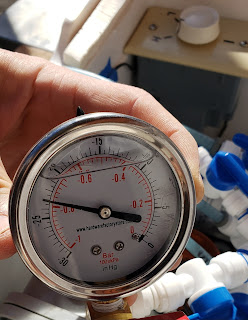
Building a temperature controlled maple tubing vacuum system For the 2021 season we converted our operation to 3/16" tubing and built a temperature controlled vacuum system that uses a diaphragm pump.  The setup worked amazing and we averaged over 1 gallon of sap per tap each day, totalling 19 gallons of sap per tap and 0.275 gallons of syrup per tap on the season.   In 2022 this system averaged over 0.35 gallons of syrup per tap on the season. We used Leader clear check valve spiles with approximately 100 taps on a total of 6 lateral lines of tubing (~16 taps per line).   Our lateral lines have fairly good elevation drop to them (over 100 feet total and at least 10 feet from the final tap in most cases).  This resulted in good natural vacuum and increased our sap yields.  Additionally, the small diaphragm pump induced additional vacuum in the lines, further increasing sap yields.  We consistently saw approximately 29 inHg of vacuum at the top of ...

Vacuum Filter / Steam Bottler - Hobby/DIY

Image
Does anyone else find filtering to be one of the most frustrating (and slow) parts of sugaring? I do.  If you are a small/hobby producer and are using a set of cone filters like I have been, it's awful.  It's slow.  It wastes your precious syrup.  And the results can leave some niter which settles out later - not attractive in nice glass bottles. Filter presses (like the big producers use) work awesome but they aren't conducive to smaller scale hobbyists.  First, they are expensive.  Second, they require a fairly large minimum volume of syrup for processing (5 gallons might be my entire season!).  Third, fairly involved set up, tear down, and cleaning. So what is an alternative? A vacuum filter . You can achieve drastic improvement over cone filtering (time and quality) at a fraction of the cost of a filter press. This year I built a vacuum filtering unit that also has a steam pan to keep the filtered syrup at a constant temperature for bottl...

DIY Portable Hobby RO

Image
This post will walk through the basic principles of reverse osmosis for maple sugaring, general design considerations for a DIY hobby unit, and an overview of multiple DIY portable hobby RO units i have built.   I use Membrane Solutions 400 and 500 gpd membranes and am incredibly happy with their performance and quality.  Here is a link to the Membrane Solutions Amazon store : General Principles: Reverse osmosis is a process by which pure water (called permeate) is created through filtration at the molecular level through semi permeable membranes, facilitated by an applied pressure (normally from a booster pump).  This removes unwanted ions, particles, molecules, and even bacteria from the water output (permeate). The "waste" output (called concentrate) is full of all the items removed from the feed water.  In maple sap applications the concentrate is what we are keeping and leads to less water to boil out of the sap, or, in other words, a higher sugar...

2019 Maple Syrup Season Recap

Image
The 2019 maple syrup season is officially over in the greater Pittsburgh area.  Overall it was a great year.  We enjoyed our new homemade evaporator and our new homemade RO .   In 2019 we had 36 taps and produced a little over 6.25 gallons of syrup.  The majority of the syrup was golden, with a very small amount of amber (a couple of quarts) and only two small batches of dark (less than 24 ounces) at the very end.  Overall this is very good considering most of our trees are red maples and we had a pretty consistent 64:1 ratio for sap to syrup (collected just over 400 gallons of sap on the season). Now its time for maple festivals! This year we will be entering syrup for all three grade A classifications, golden delicate, amber rich, dark robust.   Sugar Tree Run - Golden, Amber, Dark Check back after April 26th to see how our syrup did! Be sure to check out your local maple festivals.  Here are some links to a couple of great ones...

End of Season Equipment Cleaning

Image
When then maple sugaring season has come to a close, there is a lot of cleanup and storage that needs to be done so that everything is well maintained and kept in order for the next season.  In this post we will discuss tips for cleaning the following maple equipment: Evaporator pan Reverse Osmosis (RO) cleaning and storage Buckets & lids (collection and gathering) Spiles Collection / gathering tanks   The required items and process steps are outlined below and are accompanied by instructional videos.  Evaporator Pan Things you will need: White vinegar Water (preferably permeate or distilled) Non-abrasive cleaning cloth or large scrub brush Baking soda Garden hose or pressure washer (optional) Detergent free SOS/scouring pad (optional) Process: First, make sure your pan has been drained of all sap and syrup.   Premix a 50/50 blend of white vinegar and hot permeate (if you used an RO system during the year), distilled water, or ...

Indicators Maple Syrup Season is Over

Image
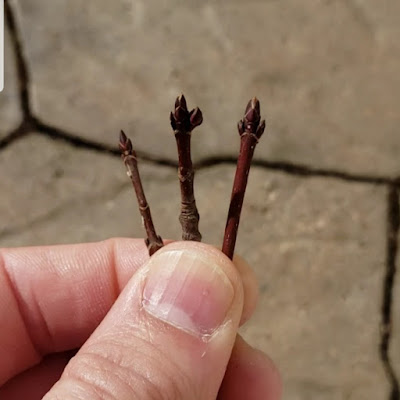
How do you know when maple syrup season is over?  There are a few typical things that bring the season to a close: Weather - it just gets too warm and there are no more freeze/thaw cycles that cause the sap to run. Also, extended warm weather periods increases bacteria in the tap hole and can significantly lessen or stop sap flow.   Trees - sometimes they just shut down and stop running even if you are still getting some decent freeze/thaw patterns.  This is pretty typical behavior for red maples Budding - the trees are beginning to bud and will soon be dawning their leaves for the year.  As the buds break and photosynthesis begins, this causes changes to the sap, negatively impacting the flavor of the syrup.  This is frequently called "buddy", a type of "off" flavor.   Examples of red maple early stage budding Below is a video covering the basics of knowing when your season is wrapping up and shows examples of red maple and su...

How to Make a Maple Stir from Pure Maple Syrup

Image
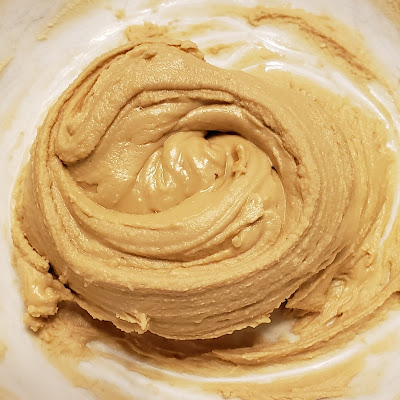
Nothing is sweeter than a delicious maple stir. Today we are going to show you how to make one from pure maple syrup.  Things you will need: Pure maple syrup (8 oz. makes about 4 stirs) Stainless steel pot Candy thermometer (goes to minimum of 240°F) Bowls and spoons Process Heat the pure maple syrup in the pot to 235°F.  Be very careful to prevent the syrup from foaming up and boiling over and out of the pot.  Adjust the heat as necessary to prevent this, yet still raising the temperature of the syrup.   Promptly remove the syrup from the heat at 235°F, allowing it to cool in the pot to 175°F.  This will take approximately 10 minutes. Pour approximately 1.5 - 2 oz of syrup into each bowl and begin stirring quickly.  Syrup will start to thicken and lighten in color as it sets up into a creamy treat. Enjoy! 

Custom Hobby Maple Syrup Evaporator

Image
In 2022 I rebuilt this evaporator to accomodate a set of Smoky Lake Dauntless drop flue pans. I added burners, stainless sidewalls, and lengthened the arch. In 2019, I designed and built a custom hobby maple syrup evaporator to improve efficiency and increase the volume of syrup we could produce.   In this post I will outline some of the design and build process.   Custom Hobby Evaporator Specs and Features Number of taps: 10 - 50 Max main pan volume: 27 gallons (29.5" long x 21.5" wide x 10" deep) Recommended batch size: 5 gallons (sap or concentrate) Evaporation rate : 4 gallons/hour for 5 gallon batch Fuel type:  Natural Gas (can be converted to propane with different orifice) Thermal output: 210,000 - 270,000 BTUs Burners: three (3) stainless steel U-burners Piezoelectric ignition Independent burner valves and air/gas mixing chambers Lid : stainless steel tiltable with steam catch channel Draw-off:  gate valve over a mountable 6" ...